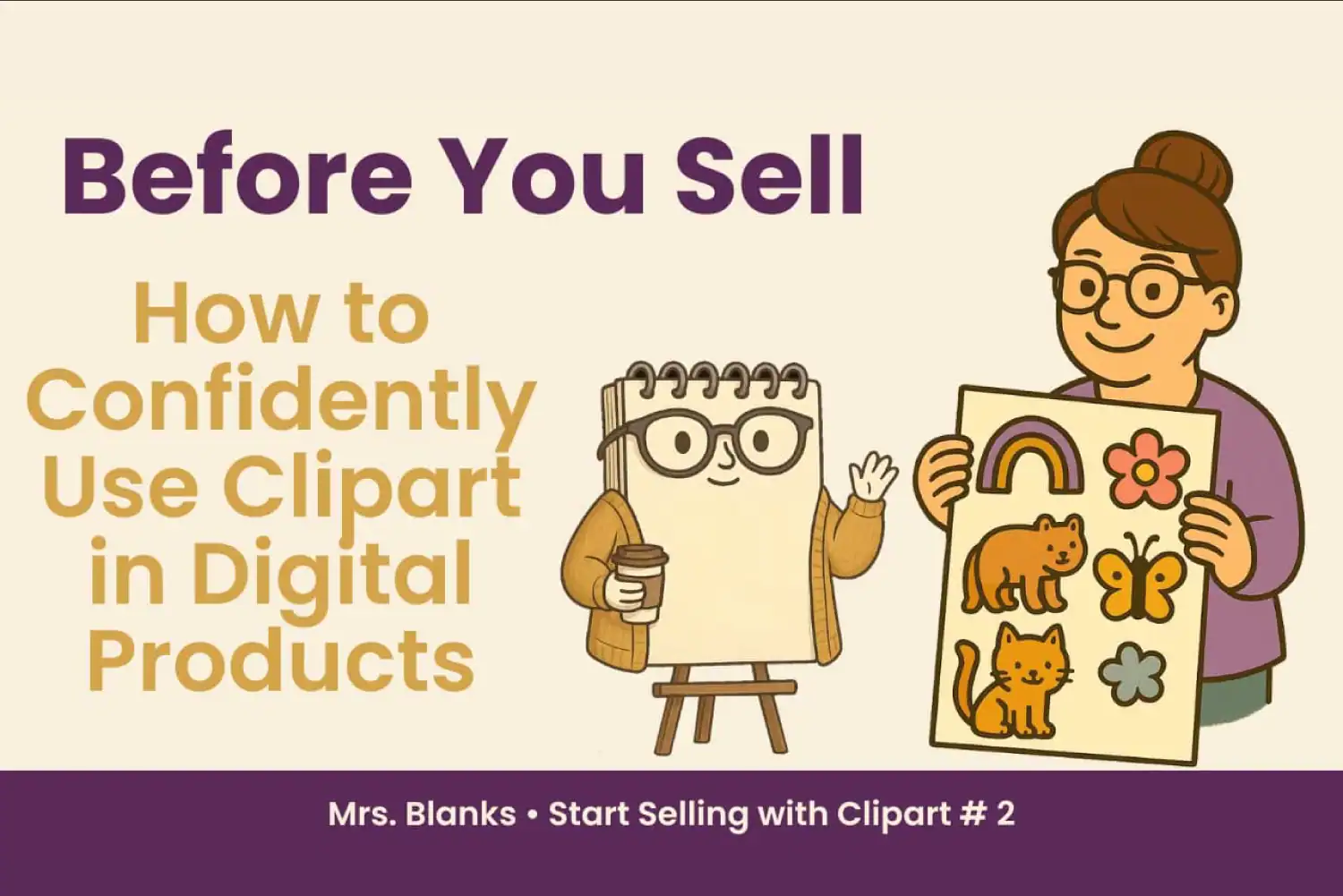
Before You Sell: How to Use Clipart the Right Way (Personal vs. Commercial + MRR Explained)
Can I actually sell something made with commercial use clipart? Short answer, yes. You do not need a law degree or a design degree to begin. If you’ve been overthinking licensing so hard that you’ve talked yourself out of trying, you are in the right place. We’re going to keep this calm, simple, and doable. You’ll learn how to use clipart for both personal and commercial use, what “commercial use” really means, and how to protect your shop while you build your creative business. Breathe, you’ve got this. And one quick note before we jump in: this is creative common sense, not legal advice, so always read the terms of use for any art you use.
Rather watch or listen instead of read you can watch my YouTube video right here
Clipart licensing can feel confusing at first, but it does not have to stop you. We’re talking basics, not perfection. The goal is a clear path so you can create your own products and start selling digital products with clip art confidence. Think of this as your friendly guide to make smart, safe choices and keep your shop out of trouble.
You’ll learn how personal use vs commercial use works, what counts as “adding value,” how to avoid common traps, and a simple way to get full MRR rights without guessing.
What Commercial Use Means
Let’s simplify the two big terms you’ll see everywhere.
- Personal use: You make something for yourself or as a gift. No money changes hands.
- Commercial use: You make something you plan to sell. Money is involved in some way.
Use this baking analogy. Clipart is the ingredient. The design you sell is the final design. Flour is not a cookie. You combine ingredients, add your flavor, and you bake something new. Same idea here. You take the art, design with it, and turn it into a finished design that stands on its own.
This is the heart of such licensing. When you sell, you sell the cookie, not the bag of flour.
Good vs. Not-So-Good Examples
The difference comes down to adding value. Are you designing a finished piece, or are you just passing along the artist’s work?
- ✅ Good: A bookmark or greeting card made with clipart, where you add text, color, layout, or effects.
- 🚫 Not good: Selling the raw PNG file as-is, or dropping an image on a page with no real changes.
Here’s a concrete example. A not-so-good bookmark uses one image pasted three times with nothing else. No text, no background, no layout, and no flattening. Buyers could extract the art and get the same image the original artist sold. That is redistribution, not design.
A good bookmark adds value. You choose a color palette or black and white scheme, place elements with intention, add a quote, and create balance with spacing and shadows. You combine multiple assets and flatten the finished design so the original image is not loose. Now you have a new product that is ready to sell in high resolution 300dpi.
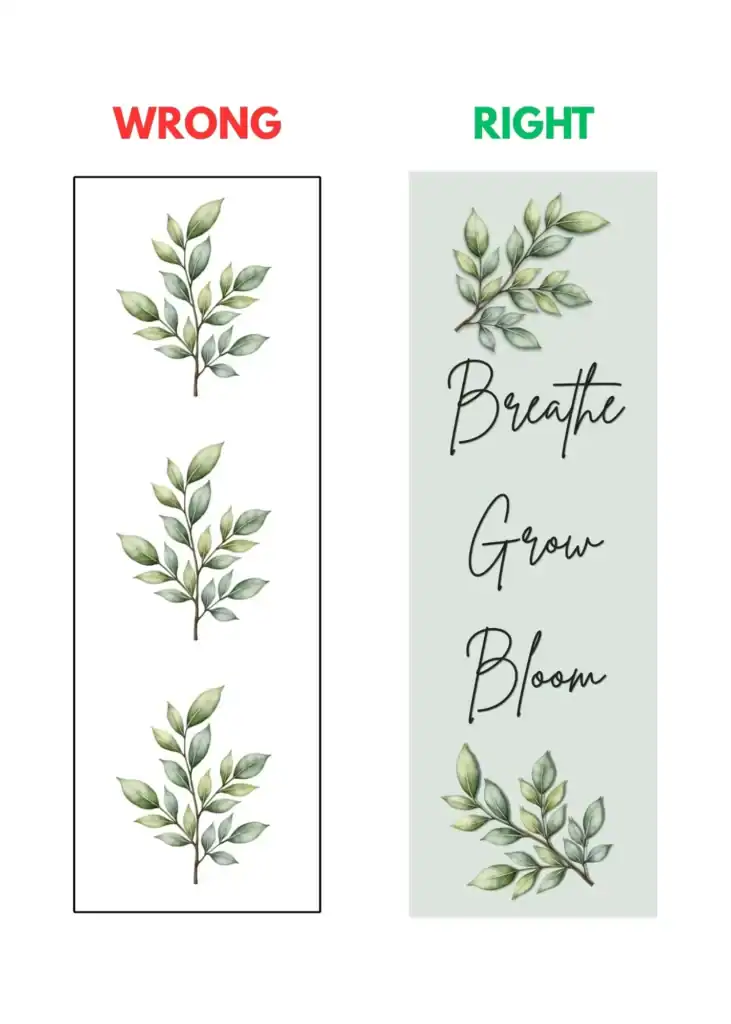
Adding value can look simple:
- Edit and combine elements into a cohesive layout.
- Add type, color, and backgrounds for a finished look, such as turning assets into coloring pages.
- Flatten the design so the image can’t be pulled out.
Keep this in mind, especially if you’re selling printables, stickers, or images for Canva templates. You are the designer. Your choices turn parts into a product.
Common Mistakes & How to Avoid Them
A big mistake is assuming the platform’s license covers you. It might not. Always check the original artist’s terms, especially if you found the graphics on a marketplace. Some graphics online are uploaded by someone other than the real creator, and the platform will not always back you in a dispute, even if a listing claims a license included. This has happened before with some large online graphics brands. Creators thought they were using art correctly, but the original artist later came forward. It’s rare, but it’s a good reminder to stay aware.
Here’s a friendly copyright reminder to protect your shop: Avoid anything that looks like a Disney character, brand logo, or pop-culture design. Even if you redraw it by hand, it’s still a violation if it’s recognizable.
A few quick checks help a lot:
- Search “[brand name] trademark” before you design.
- Look at official trademark databases for the major regions where you sell.
- Save proof of your checks in case you need it later.
Stay original and you’ll sleep better.
If you’re tired of guessing what a license means, I built something for you. Inside Clipart to Cash, every pack includes full MRR rights. That means you can use the art in PLR bundles, or resell on platforms like Gumroad or Paddle, with real clarity. This provides straightforward access to commercial use clipart that empowers your projects.
What you can do with Clipart to Cash:
- Use the designs in PLR products. They can be loose inside your templates so your customers can move them around within your product.
- Create and sell print-on-demand items without needing to change the art. Put it on a mug, a tote, or a sticker sheet.
- Resell the designs as your own on your own website or on platforms that allow it. Many members combine packs, adjust sets, and sell them under their brand.
- Use it in unlimited personal and commercial products. No caps, no counting.
Two simple limits keep things clean:
- No reselling the files as-is on Etsy. That is Etsy’s policy.
- No creating a competing membership with the art.
You have real creative freedom here. No gray areas, no tiny gotchas. Just clear rights that let you move forward.
A few bonuses inside the membership:
- 200+ new designs every month, including themed packs like Christmas clipart.
- At least one member-only pack for the first 3 months.
- Weekly trend reports and one over-the-shoulder product build from those trends.
- Step-by-step trainings, like how to make bookmarks, wall art, and other popular printables.
- A community to share, ask questions and discuss your work with others.
If you want this kind of clarity and momentum, you can join Clipart to Cash.
Easy Next Steps
Want a simple, safe starting point? Grab the free clipart pack that includes 10 clipart niches and 10 starter designs. It comes with freebie clipart commercial use rights, so it’s free for commercial use; you can try ideas, test listings, and learn what sells in your shop.
You don’t need perfect, you just need clarity and a first step. Progress over perfection, every single time.
Extra Clarity for Beginners: Quick FAQs
What does “flattened” mean?
Flattening means your buyer can’t pull out the original clipart file. You save your finished page as a JPG or PNG, then use that image in your final product. Great for templates, printables, and stickers.
Can I use purchased art inside Canva templates I sell?
Yes, if your license allows it and your end user cannot extract the original art. If you want users to type on the page, flatten the art first, re-import it, then add text boxes.
Is it okay to use “inspired by” characters?
No. If it is recognizable as a famous character, logo, or brand, skip it. This applies even if you drew it yourself.
What about Etsy printables?
Etsy is a solid place for beginner digital sellers, but you still need to follow licenses. Skip reselling raw files. Sell finished designs like planners with math clipart, wall art featuring autumn clipart, stickers using school doodles clipart, and educational resources incorporating science clipart, where the art is part of a complete product. Remember to save these as PNG or JPG to ensure everything is flattened.
How do I reduce risk when purchasing digital assets?
Buy from trusted creators, read the license, and save your receipts and terms. If you are unsure, ask the artist before you buy.
Quick Recap (TLDR)
- Personal use means for you or as a gift. No money involved.
- Commercial use means you plan to sell. Money is involved.
- Good use adds value with layout, color, type, or packaging.
- Not-so-good use passes art along as-is or with tiny changes.
- Always read licenses, even for free clipart, and if unclear, ask the creator.
- Stay away from famous characters, logos, and pop-culture designs.
- If you want MRR rights without confusion, join Clipart to Cash.
Clipart is your ingredient, whether it’s ocean creatures clip art or floral clipart. Your layout, words, color, and choices turn it into a final product that sells. Keep it simple, keep it honest, and keep going. Clarity beats perfection every time.